Dress2Save
Testing an AI stylist for fashion commerce.
I co-founded and led product work on an AI stylist and virtual try-on e-commerce extension designed to help shoppers make more confident purchase decisions inside existing online stores.
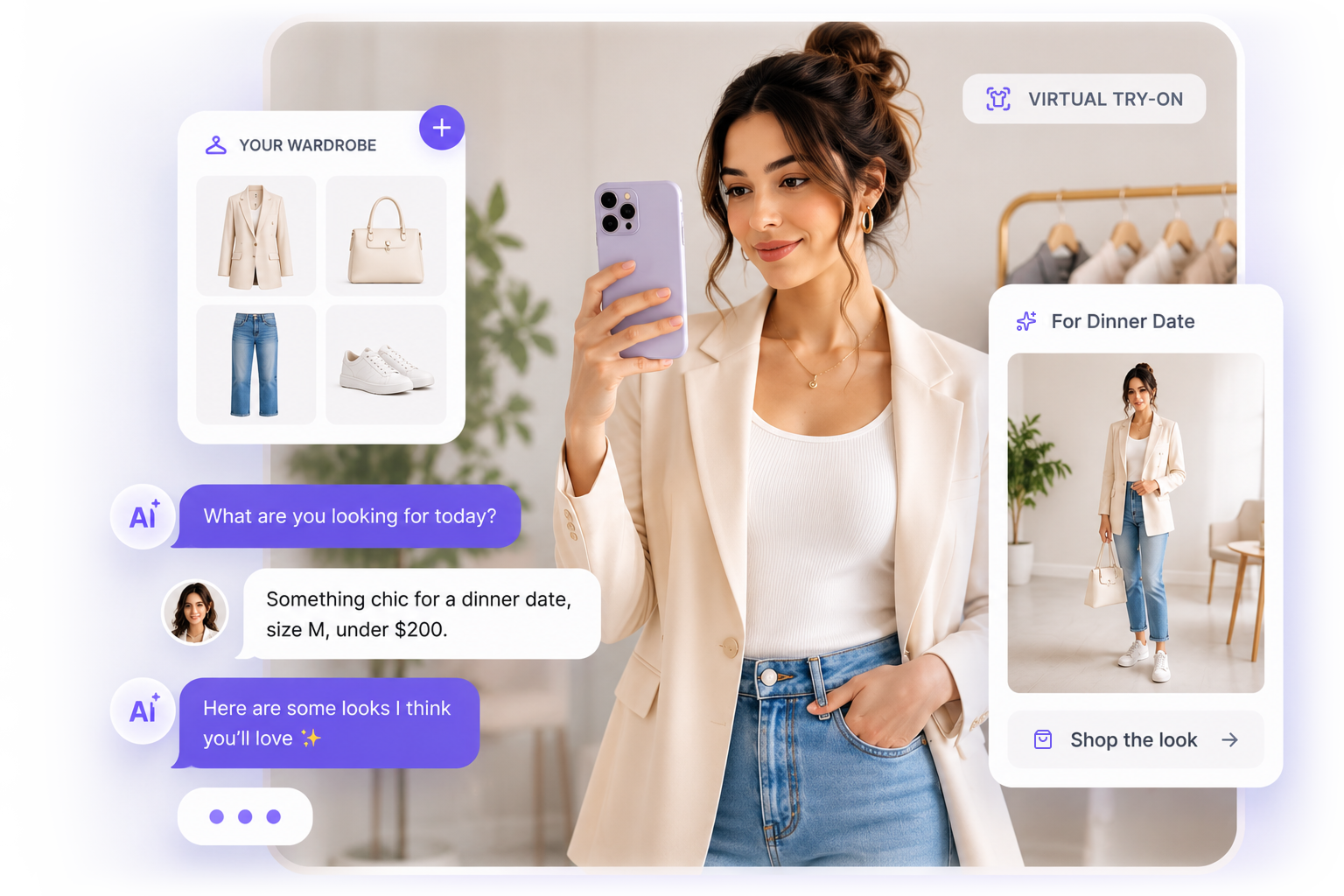
The product thesis
Global fashion e‑commerce has a confidence problem.
Shoppers hesitate when they can’t imagine how an item fits their body, style, wardrobe, or situation. Retailers lose attention, conversion, and margin through poor discovery, abandoned carts, returns, and low retention.
Dress2Save explored whether an AI stylist and virtual try-on layer could reduce that uncertainty without asking retailers to rebuild their existing commerce experience.
More confidence before buying — fit, style, and how a piece works with what they already own.
Better discovery and engagement, fewer doubts, fewer returns — without rebuilding their store.
More use from existing wardrobes and fewer purchases people never wear.
01 What I led
My role was founder-level, not only design execution.
As co-founder and CPO I owned the product story end to end — shaping the proposition, building the demo, pitching it, and translating the idea into a case fashion-commerce stakeholders could act on.
Defined the customer problem, the product promise, early scope, and the experience.
Built the demo, pitch, and product narrative for retailers, partners, and investors.
Explored API integrations with adjacent products and technology partners.
Ran demos, conversations, and follow-ups with fashion and retail stakeholders.
02 The product
An AI stylist inside existing fashion stores.
We built a conversational stylist that adds onto a retailer’s site. Shoppers could ask for outfit ideas, upload wardrobe items, explore virtual try-on, and get recommendations based on taste, size, and occasion.
A stylist that lives where people already shop.
The assistant docks beside any product, reads the item in view, and builds a full outfit around it — pulling in pieces the shopper already owns.
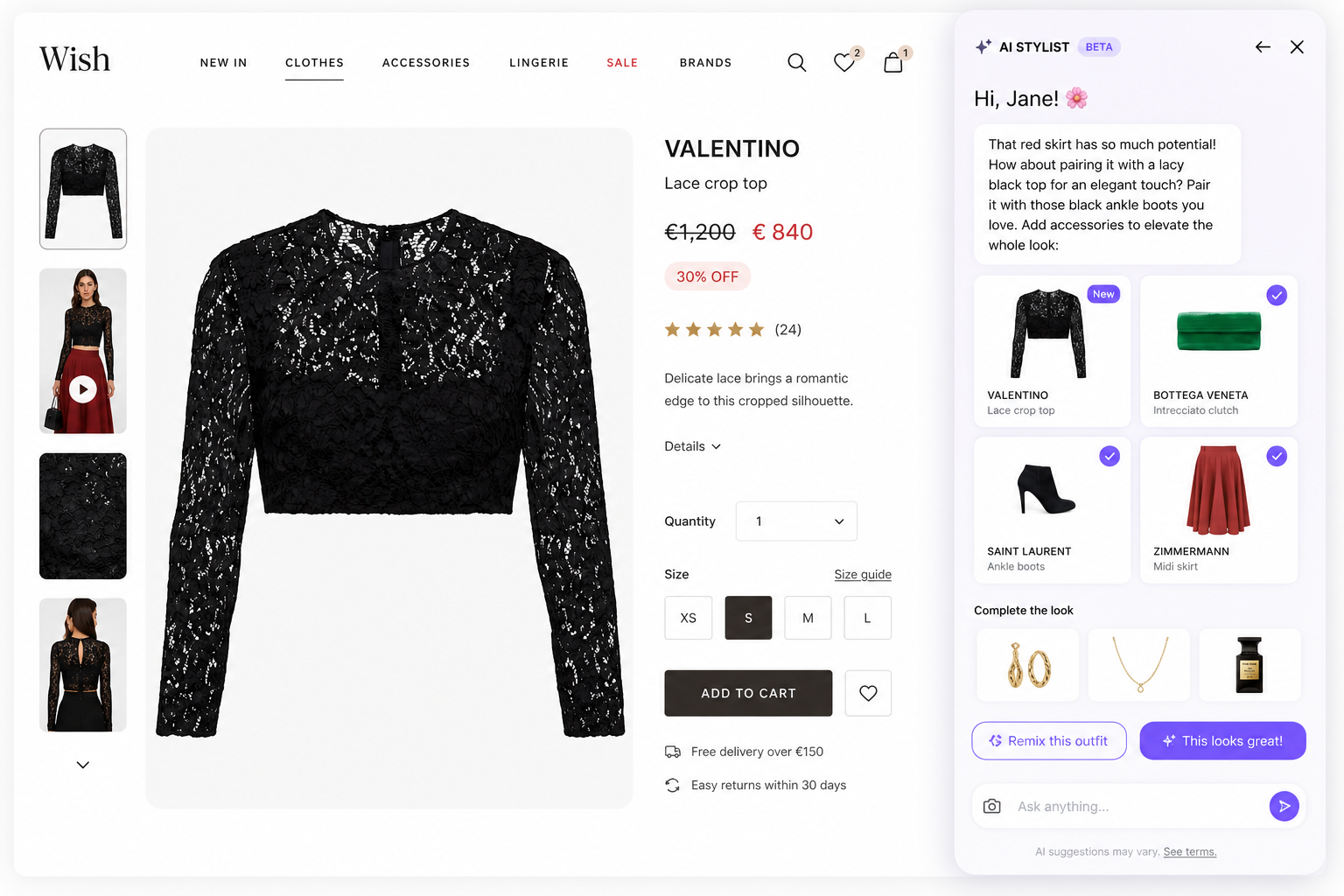
From a single item to a whole, buyable look.
One tap turns a browse into a styled set — owned pieces marked “your item”, new pieces marked clearly, so the only things left to buy are the ones that complete it.
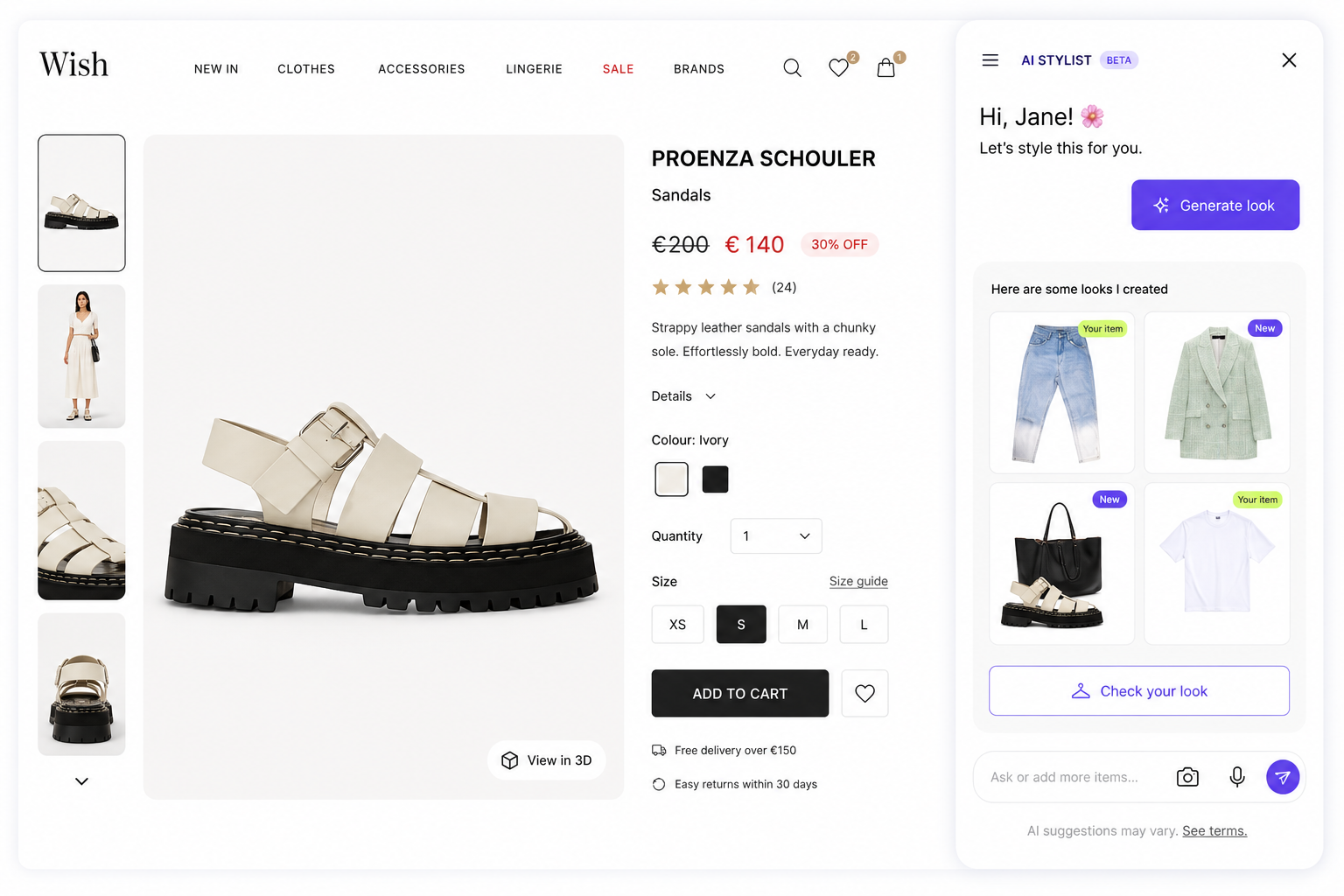
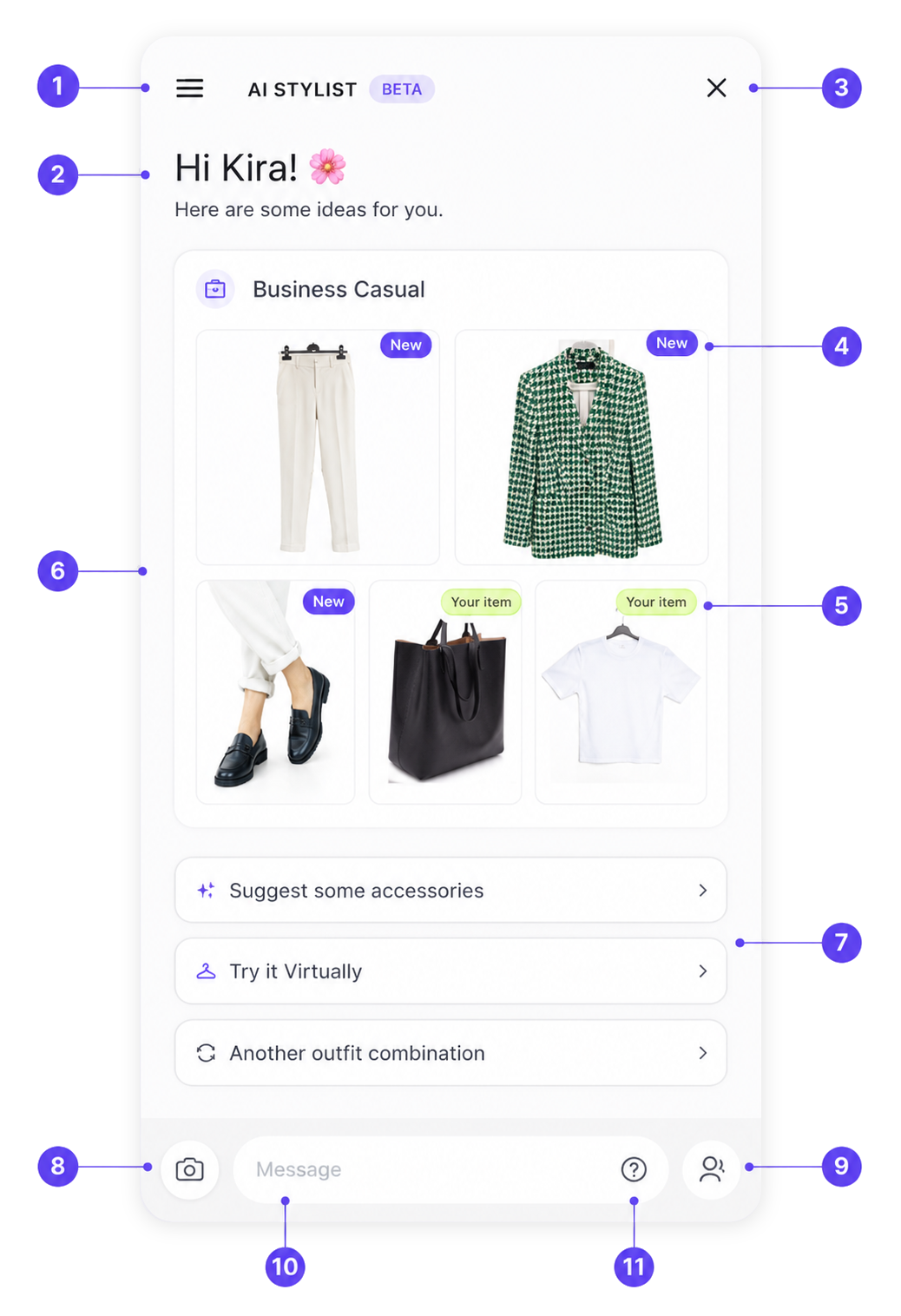
One panel, eleven decisions.
- 1Menu & quick actions
- 2Greets you by name
- 3Close the stylist
- 4“New” / “your item” tags
- 5A piece in the look
- 6Scroll through the look
- 7Things you can ask
- 8Add your own clothes
- 9Talk to it
- 10Message area
- 11What it can do
A plug-in solution on top of existing commerce — not a rebuild.
- 01Retailer storefrontThe store and catalogue the shopper is already on.Existing
- 02Dress2Save assistantA conversational stylist, dropped in on top.Added
- 03Taste · size · wardrobeThe shopper’s profile and the pieces they upload.Added
- 04AI styling & try-onOutfits, fit guidance, and pieces that complete the look.Added
- 05Checkout & analyticsStraight back into the retailer’s existing flow.Existing
- Confidential data stays client-side
- Foundation models — cloud or on-prem
- Connects through partner APIs
- Minimal lift for the retailer
 Responsible AI
The prompt was an interface, so it was a design problem.
Applying Microsoft’s Responsible-AI UX guidelines, trust, tone, and safety weren’t bolted on at the end — they were written into the system prompt and treated as part of the experience.
- 01Establish appropriate trustBuild trust by being transparent, reliable, and consistent in every interaction.
- 02Help people spot inaccurate contentSurface uncertainty, cite sources, and encourage critical thinking.
- 03Help people form better inputsGuide users to provide clear, specific, and context-rich inputs.
- 04Help people understand & use outputsMake outputs easy to scan, understand, and act on with confidence.
- 05Accessibility built in from the startDesign for everyone with inclusive patterns, content, and interaction.
03 From demo to traction
A working demo opened real conversations, fast.
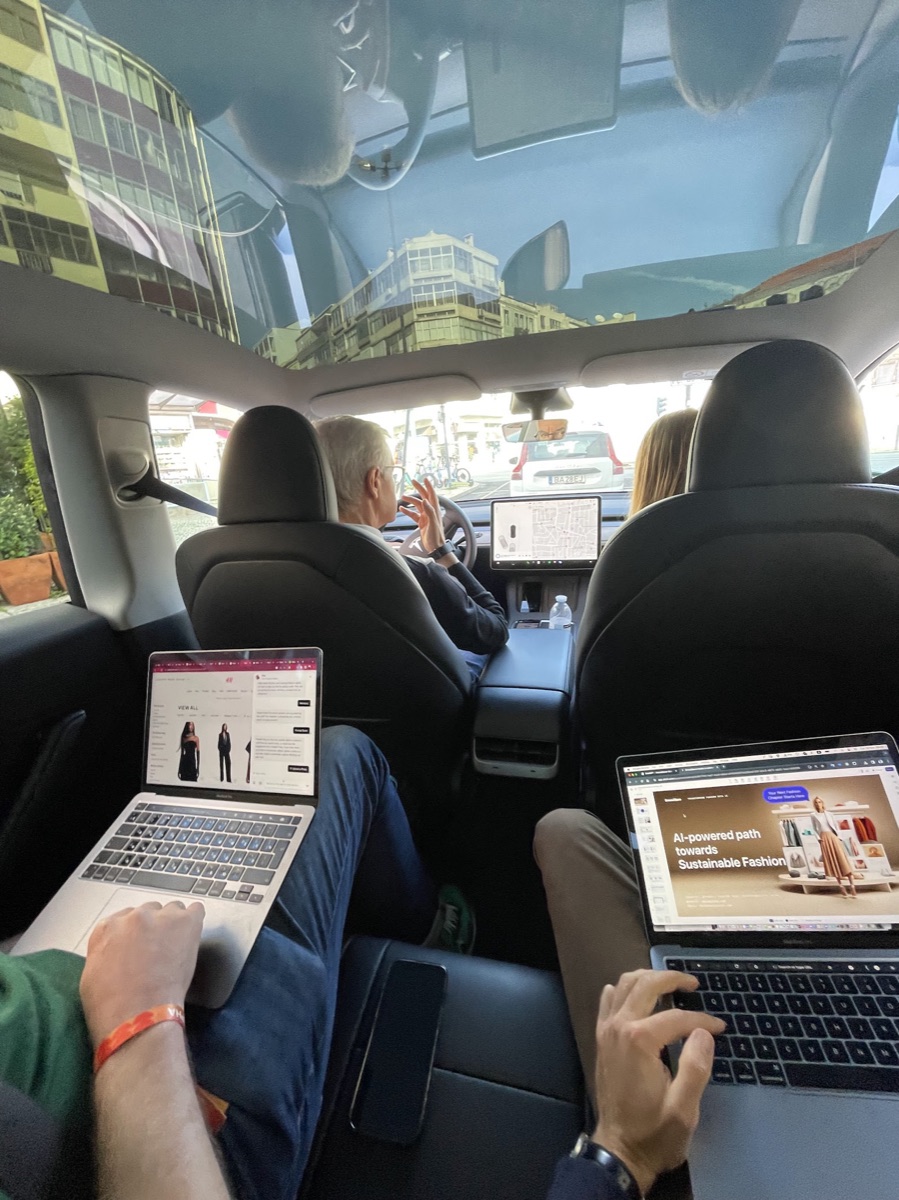
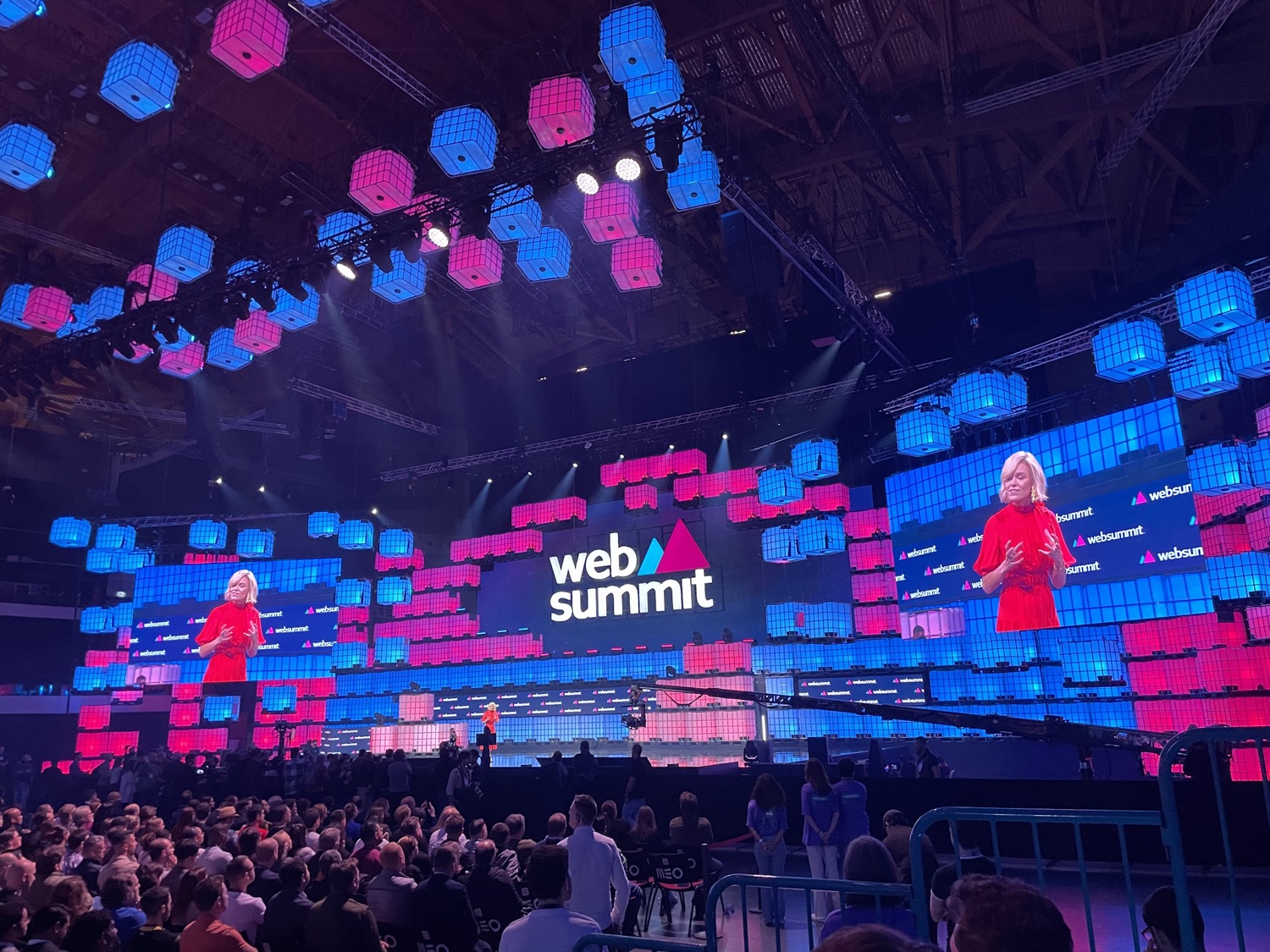
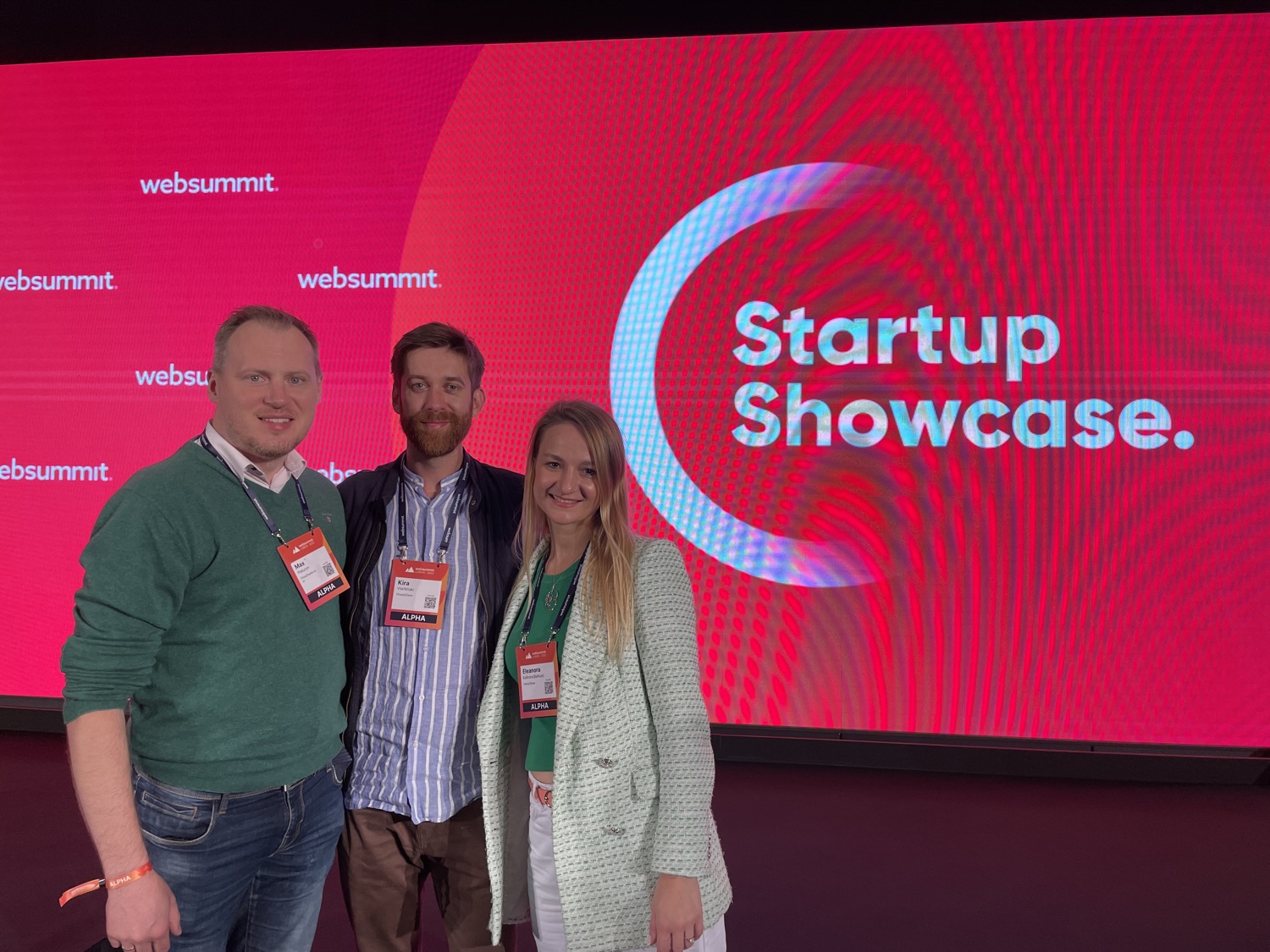
We took Dress2Save to Web Summit in Lisbon and used the demo to start conversations with retailers, brands, technology partners, and investors. In the first 90 days:
- 544ad-campaign clicks
- 14companies contacted
- 9demos during Web Summit
- 9customer-development calls
- 6pre-sales conversations arranged
- 3enterprise opportunities
- $1.9Mpotential ARR in the pipeline
Early signals from a pre-seed exploration — not closed revenue.
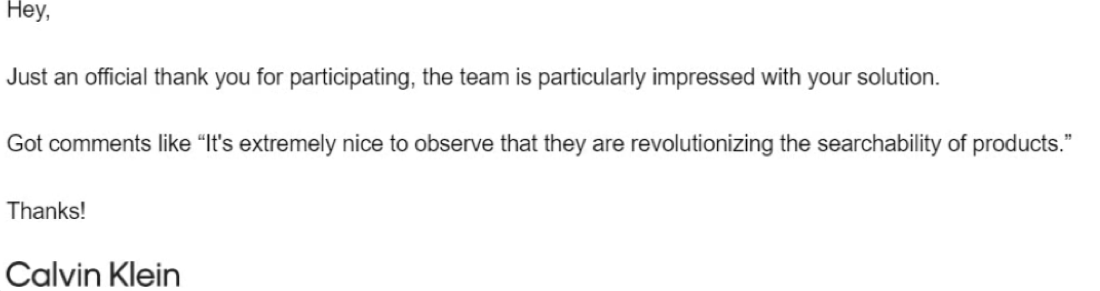
Qualified conversations with global fashion & retail brands





You’ve cracked the code on personalized shopping experiences.
This AI stylist is an absolute game-changer!
Wow! Can you upload a James Bond photo?
04 Business model & GTM reality
The demo proved interest. The model exposed the harder problem.
We explored revenue-share and flat-fee pricing and mapped go-to-market across several channels. The opportunity was real — but the path to revenue ran through enterprise trust, integrations, procurement, and long sales cycles.
 Case study
- Vinted turnover€370Bn*
- 90% of orders go through search — 0.9 × 370€333Bn
- Margin generated via search — €333Bn × 0.05€16.65Bn
- Potential ARR — €16.65Bn × 0.15 (volume) × 0.03 (fee)€74.9M
* Based on Vinted public information. A sizing scenario, not booked revenue.
05 Why we stopped
Stopping was a product decision.
The product interest was real, but the path to a sustainable company was harder than the demo. We were caught between two expensive requirements:
We chose to stop instead of spending another year forcing a path that no longer matched our resources. The limiting risk had moved from product desirability to go-to-market viability.
06 What this proved
The problem resonated
Retailers and partners understood the value of reducing uncertainty around fit, styling, and confidence before purchase.
The demo opened doors
A working prototype let us start serious conversations with retailers, brands, partners, and investors quickly.
The ecosystem was hard
The product depended on integrations, enterprise trust, and procurement timing we couldn’t fund our way through fast enough.
GTM risk beat product risk
The open question wasn’t whether the AI could be useful — it was whether we could reach and convert enterprise customers in time.
07 Reflection
Dress2Save taught me to separate product desirability from go-to-market viability earlier. A prototype can prove people understand the idea. It does not prove the business system around it can work.
The real product problem wasn’t only styling and try-on. It was distribution, trust, enterprise timing, and the cost of reaching the market.
The demo proved desirability. The market taught us about viability.
Building a 0→1 AI product under real market pressure?